

This is me playing around with midi Elektor formant midi interface. It is still in developement, but it already sounds quite nice…..
Author Archives: tubbutec
Interfacing a tristate switch with one µC pin
This is just a little trick I have not seen anywhere before, so I thought I might as well share it with the world.
If you have a switch with three states, such as an on-off-on switch and you only want to use one microcontroller pin, this is how you can do it:
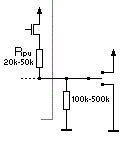
The image shows the basic setup. Resistor values are given for Atmel controllers, but this should also work for PICs and other µCs.
If the switch is connected to Vcc the input reads high, if it is connected to GND, it reads low. But if the switch is in its open setting, the reading is depending on the pullup resistor beeing switch on or not. This can be used to recognize all three states: high, low and open.
Here is a pseudo c example:
uint8_t getPin(uint8_t num)
{
    setPullup(num, OFF);
    if(readPin(num) == HIGH)
        return 0;                //input is connected to Vcc
    setPullup(num, ON);
    if(readPin(num) == HIGH)
        return 1;                //input is open
    return 2;                    //input is connected to GND
}
symbols are from this site
Update 2019:
Just found this old blog post, though I’d update it a bit:
if you are using a µC which has both, pullup and pulldown (STM32 for example), you can of neglect the external resistor.
Developing a midi interface for Elektor Formant
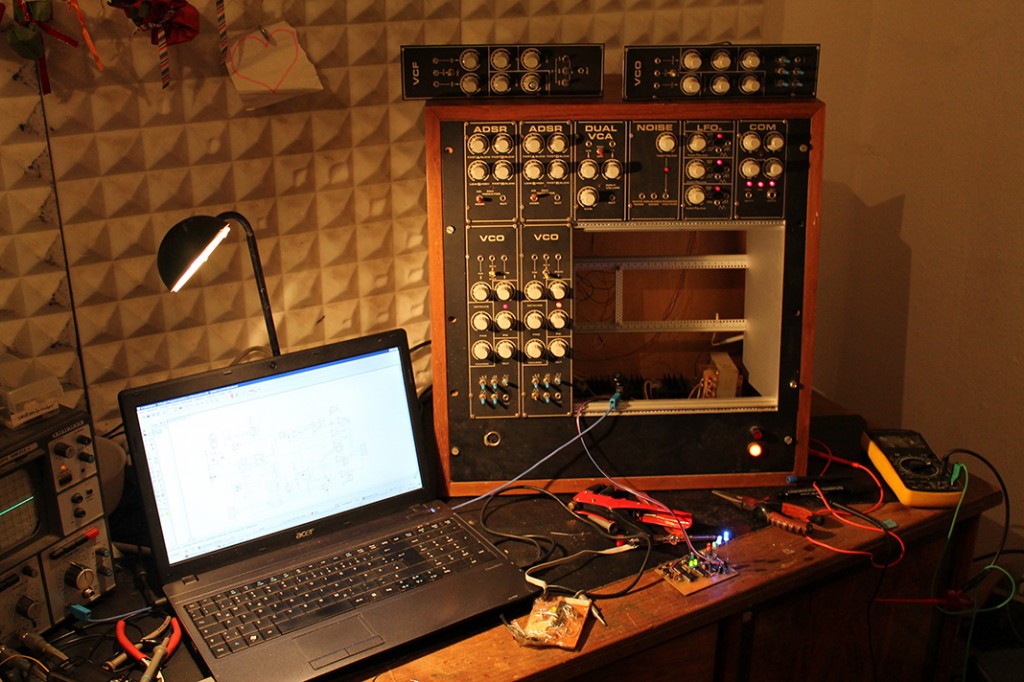
I am currently working on a midi interface for the Elektor Formant. Of course it is possible to use any midi to CV interface since it is a modular synthesizer, but I wanted to add some features only possible with a custom interface. With this interface it is even possible to have 3 voice polyphony !!!
Features so far:
- 4 individual CV outs. 2×12 bit high precision, 2×8 bit
- Glide and master pitch controls
- FM input
- CVs are controllable by midi notes or controller messages
- Leds for CVs and Gate
- Switch between standard kexboard and midi interface
Planned features:
- Analog gates
- auto glide (switch glide on and off)
- nice front panel
This is the prototype PCB:
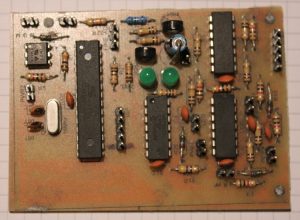
I am going to sell PCBs (much nicer ones than the one on the left of course) as kits if there is enough interest in the interface…so drop me a message
Modified TR-505
One of my early works from 2007…
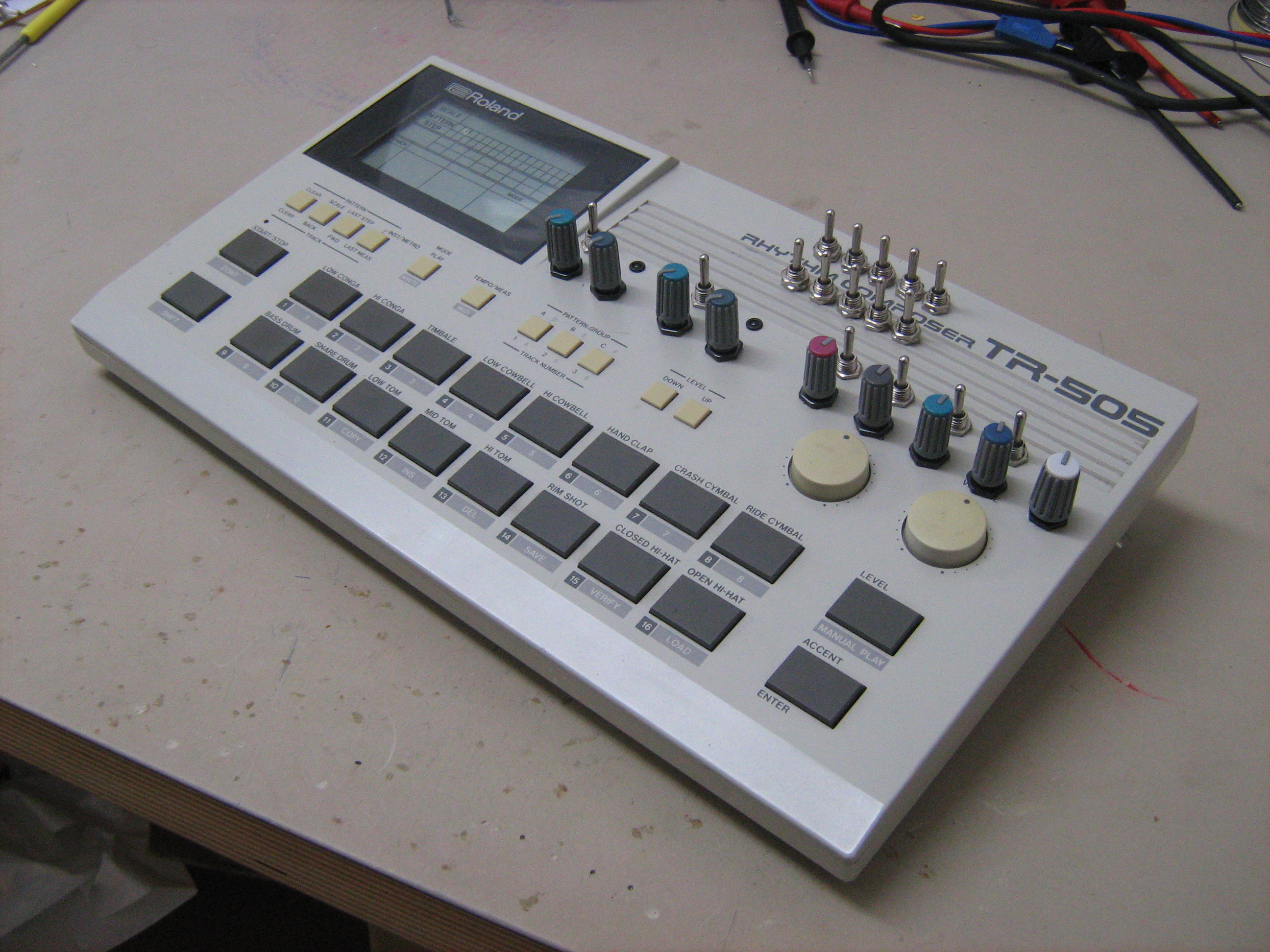
my trusty modified Roland TR-505!!
Apart from a couple of bends (the 10 switches on the top), you can tune all the differnt percussion instruments, plus a master pitch up.
So far nothing new, but there are also two LFOs with adjustable speed and amount which you can route to the instrument pitch.
Down on the side are some Leds which light up if an instrument is played. Each instrument has its own Led and the Bassdrum has 5 Blue Leds for its own.
Warning: Old and crappy video
Crumar Organizer repair
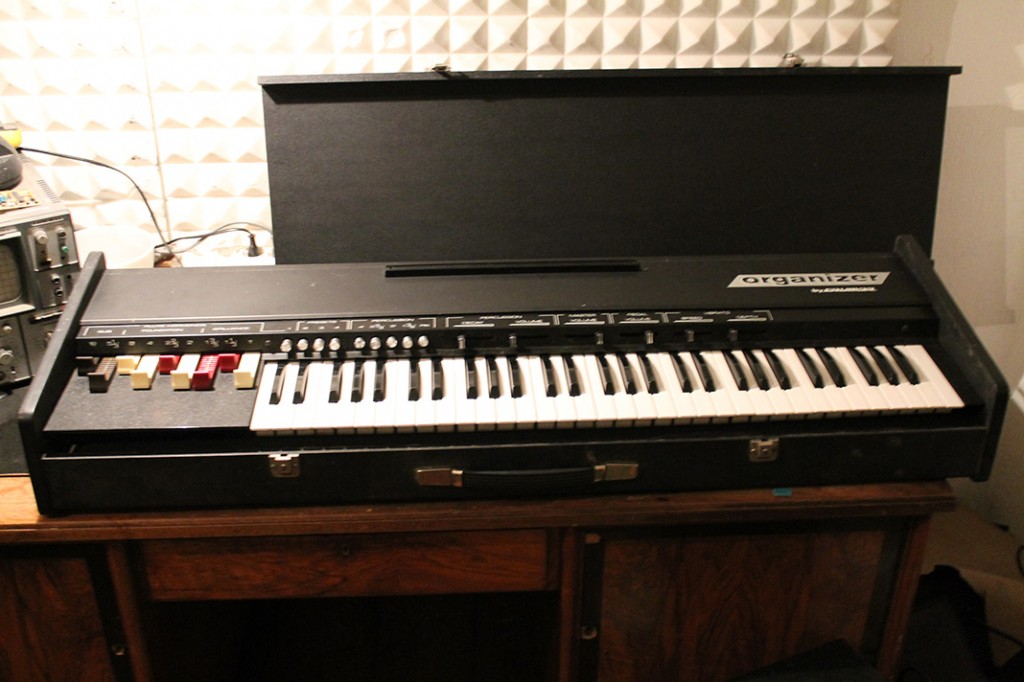
Just repaired a Crumar Organizer with the percussion section not working. The percussion section is not – as the name might suggest – a built in drum machine, but an add-on to the standard organ sound. It is basically a separate mix of the harmonics run through a master VCA which is triggered on key press.
I could trigger the effect manually but it didn’t work when pressing a key. I found no schematics, but after tinkering a bit I found that there were two reasons for the percussion effect not working:
1) The common trigger bus trace was corroded. I simply bridged the corroded parts and it worked again.
2) Every once in a while the percussion effect stopped working. My first thought was another bad contact, but it turned out to be a defective spring, which caused one of the keys of the keyboard not returning properly and thus “blocking” the trigger bus.

Electric Glockenspiel
Just found this in the attic…
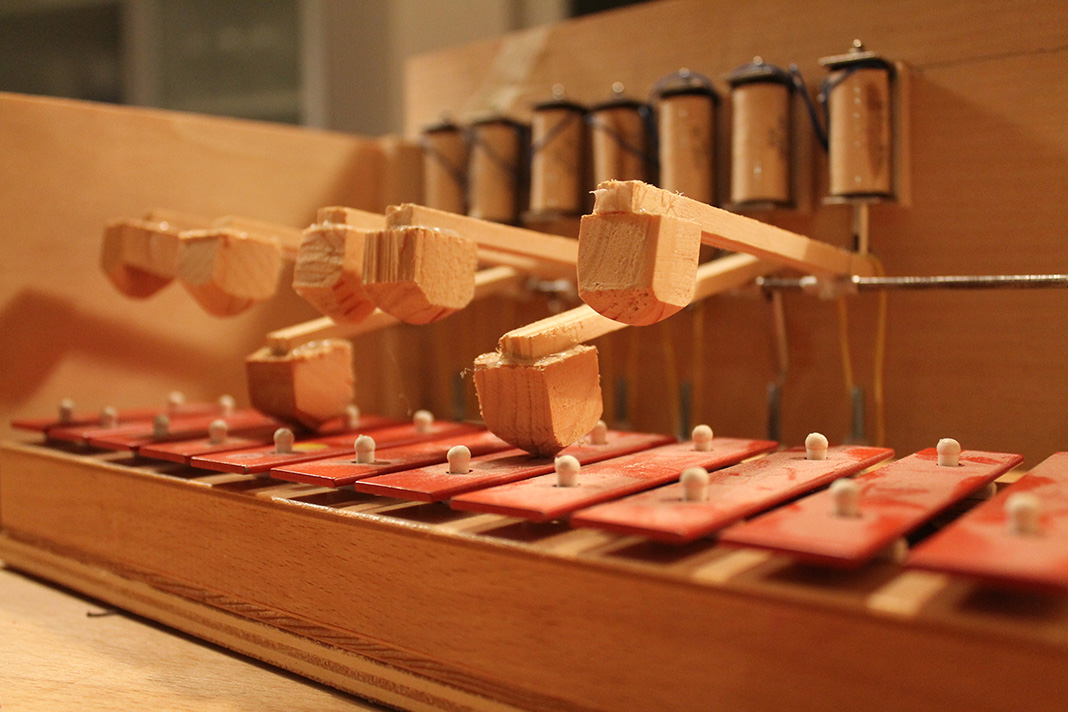
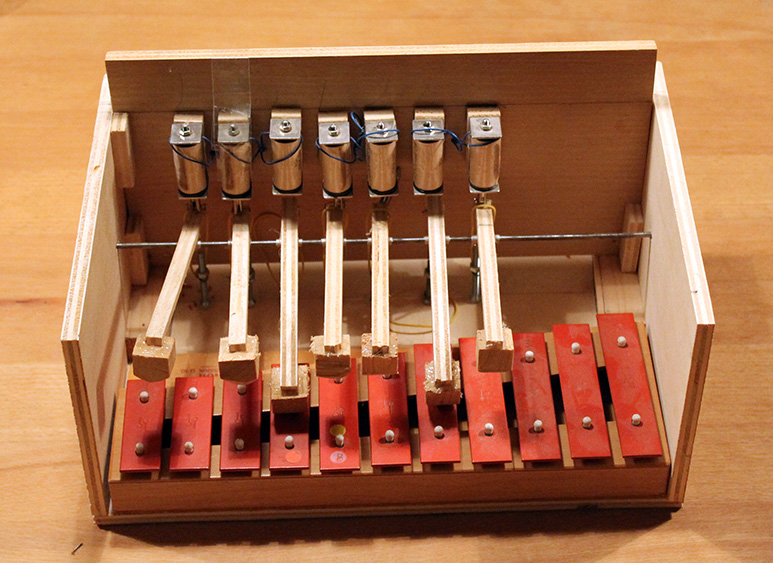
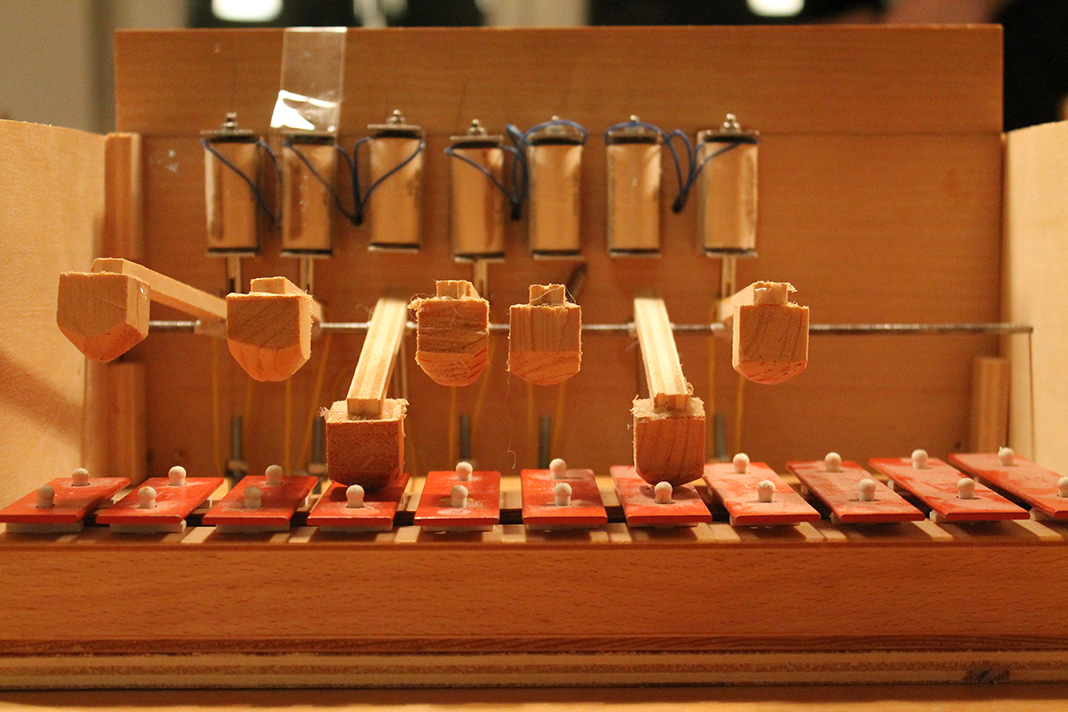
I built it when I was about 15, but never finished it. The next step would have been to install a midi interface…
It is a solenoid controlled glockenspiel and still works pretty well.
It sound great and I guess I will build a nice little midi interface, you can actually control the sound by alternating the duration of a keypress (keys are on the back), or hold it to dampen the sound.
Some nice velocity sensitive interface, the current through the solenoids possibly controlled by pwm should give some nice results 🙂
How NOT to replace a battery
A while ago I made a post about the importance of battery replacement in polysix synths.
I just found a great example of how not to do this in a Korg DW-8000:
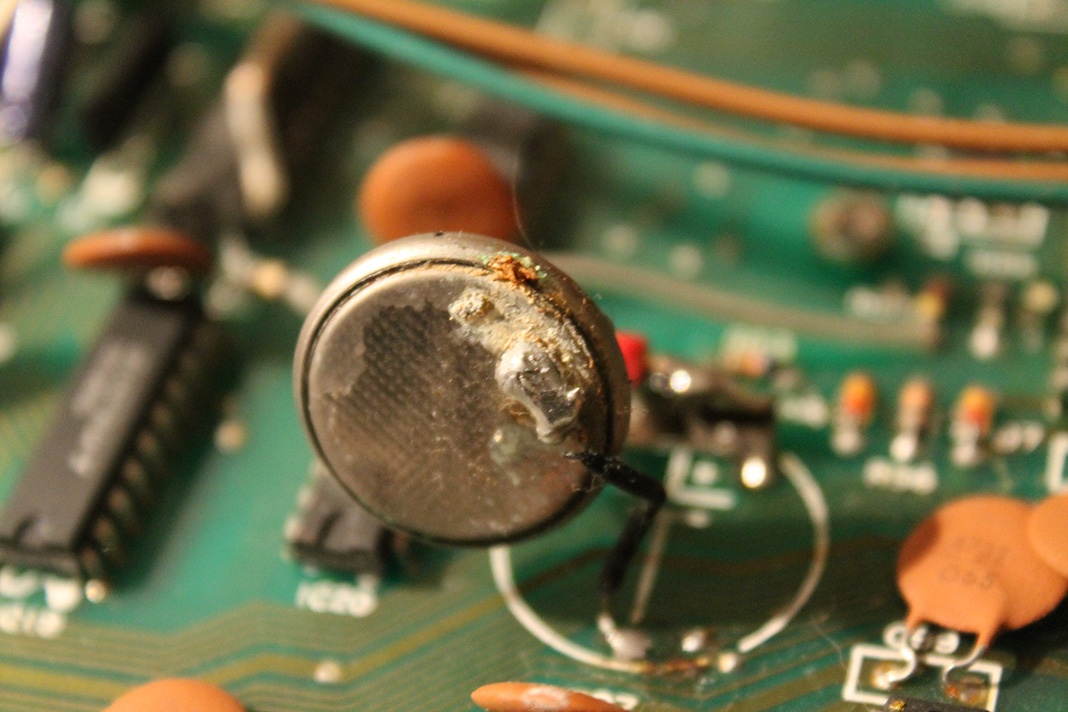
Horrible!!
Instead of a CR2032 with attached solder tail, somene soldered leads to the battery directly causing it to heat up way to much. This damaged the battery and caused some leaking eventually. The battery acid destroys sourounding traces, vias and even ICs – very bad…
Much better to do it like this:

Break
Hi,
I’m in New Zealand at the moment and not available for repair, mods, etc…..
I’ll let you know when I’m back, probably end of 2012…
In the meantime just try it here:
Schraub und Dreh
Thanks
Tobi
tr-606 extension box
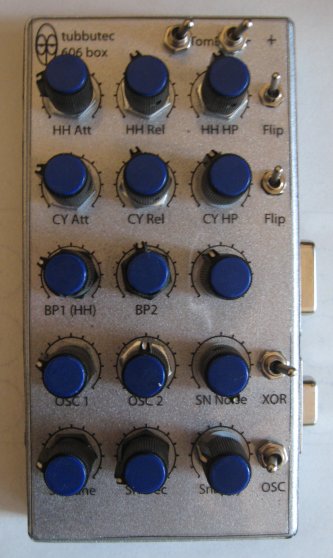
My new 606 mod. I included some features that I think are new to the world.
Cymbal and open hihat got an attack/decay envelope which is fully sensitive to velocity. This gives you independent control over the attack and decay times and the volume of the instrument.
Also I added a ring mod variant to the existing six hihat/cymbal oscillators using XORs. Gives you a great range of metallic sounds.
Audio soon to come…
Features:
-Open Hihat attack, decay [velocity sensitive!!]
-Cymbal attack, decay [velocity sensitive!!]
-Control pitch of two oscillators for the cymbal and hihat metal sound
-Chose hihat sound to be, oscillators, two oscillators with ringmod, four oscillators with ringmod, mix
-Adjust hihat highpass
-Adjust cymbal highpass
-Adjust hihat+cymbal bandpass
-Adjust cymbal bandpass
-Low tom pitch
-Switch tom noise
-Snare noise amount
-Snare tune
-Snare decay
-Snare highpass filter
mc-202 mod

Features:
-Midi-In (controls pitch, vca att., vcf att, filter, pw)
-Adjust VCF and VCA attack independently
-Extended LFO Range (100Hz to 0.1Hz)
-Filter moulation (chose between 15 different modes and sources)
-Distortion
-Ext. audio in
-Triangle waveform